
UGC Ads AI Playbook: How to Scale Authentic Video Ads Without Random Output
A structured playbook for creating UGC ads with AI, including scripts, AI actors, proof moments, subtitles, localization, and creative testing discipline.
UGC ads AI is a useful search term because it captures the real buyer problem: teams want the performance pattern of user-generated content without waiting on creator sourcing, shipping delays, reshoots, and slow edit cycles. AI can solve that bottleneck, but only when the team keeps the ad grounded in a believable customer situation.
Define the customer moment first
The most common AI UGC mistake is starting with the actor library. A better starting point is the customer moment. What is the viewer doing right before they need the product? Are they comparing tools, dealing with a recurring problem, searching for a cheaper workflow, or trying to avoid a purchase mistake? That moment gives the ad its natural voice.
Write the script as if the presenter is speaking to one person in that situation. Avoid broad claims like this tool saves time. Say what kind of time is saved, where the old workflow gets stuck, and what proof the viewer can see in the video. UGC works because it feels useful before it feels promotional.
Use AI actors as casting, not decoration
AI actors let teams create more videos, but volume alone does not create trust. Cast the presenter based on the role they play in the story. A peer reviewer can compare options. A busy founder can explain a workflow fix. A category expert can give a practical checklist. A customer can show a before-and-after experience. When the role is clear, the script becomes easier to deliver naturally.
Build the proof sequence
UGC ads need proof quickly. That proof can be a product close-up, screen recording, customer quote, demo step, package reveal, result chart, or side-by-side comparison. Put it early. A viewer should understand why the claim matters within the first few seconds. If the video waits too long to show proof, the AI presenter has to carry too much trust on facial realism alone.
Keep subtitles short and mobile-safe
Most paid social viewers will see at least part of the ad without sound. Subtitle density matters. Use short spoken lines, avoid long stacked captions, and keep important product visuals clear of text overlays. AI UGC workflows often fail at this stage because the script is written like a landing page. A good test is simple: pause the video at random points on a phone. If the subtitle block covers the product proof, rewrite the line.
Localize only after the source wins
AI makes dubbing and localization easier, but translating every draft is wasteful. First prove the source message. Once a hook and proof sequence show promise, localize the winning structure. Translate meaning rather than sentence shape, then review voice timing, lip sync, subtitle length, and local buying context.
Measure by creative variable
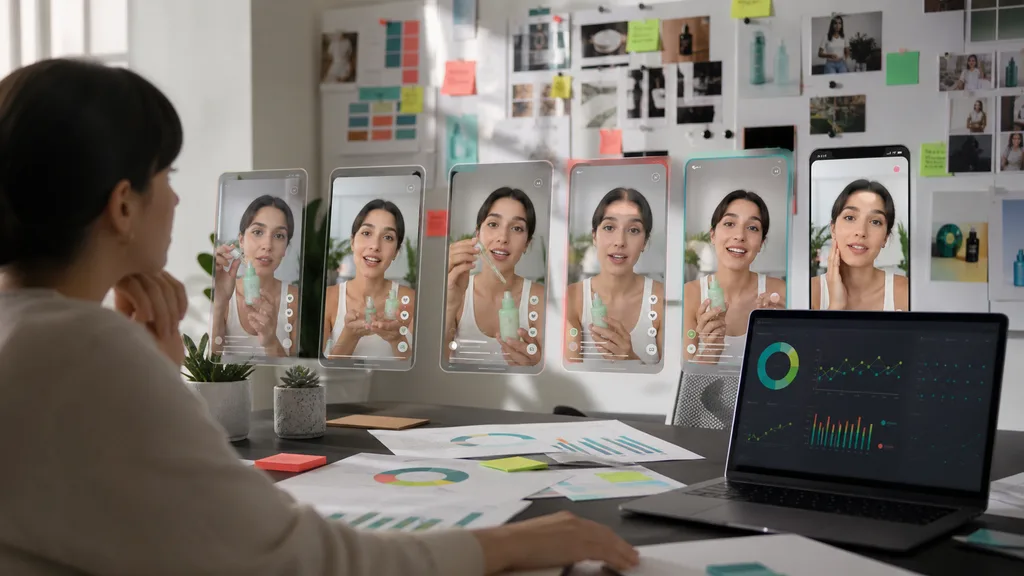
A good UGC ads AI workflow tags each variant by the variable being tested: hook, actor, proof, CTA, offer, format, or language. Without tags, performance reporting becomes a pile of thumbnails. With tags, the team can see whether buyers respond to pain-led openings, demo-led openings, expert presenters, peer presenters, or localized proof.
Build a reusable UGC template
Once a campaign starts working, turn the structure into a template. Save the winning hook pattern, actor role, proof order, subtitle style, and CTA. The next product or market can start from that template instead of a blank page. This is where AI UGC becomes operationally useful: the team is not only making more videos, it is building a library of repeatable formats that can be adapted quickly.
AI UGC is not about replacing authenticity with automation. It is about creating a repeatable path for turning customer insight into believable short-form videos. When the customer moment, actor role, proof sequence, and measurement plan are clear, AI gives teams more output without losing the trust that makes UGC valuable.
How to apply this guide in makeads
Use this guide as a practical checkpoint for planning AI UGC videos, comparing creative angles, and deciding which parts of your workflow should be scripted, generated, reviewed, localized, and tested first.
The most useful next step is to translate the advice into one production brief: define the audience, the opening hook, the proof moment, the actor style, subtitle requirements, and the metric you will use to decide whether a video variant is worth scaling.
Related focus areas for this topic include UGC Ads AI, AI UGC, Paid Social, Creative Testing. If you are building a campaign library, connect this guide with your pricing assumptions, platform policy checks, and localization plan before creating the final export.