
TV Commercial Production Costs in 2026: What You Actually Pay for a 30-Second Ad
A detailed breakdown of TV commercial production costs, from low-budget shoots to high-end productions, including actor fees, equipment rental, and how AI is cutting costs dramatically.
If you have ever asked how much it costs to produce a TV commercial, the honest answer is that it depends wildly on the approach. A local business might spend a few thousand dollars on a simple spot, while a national brand can spend half a million on a single thirty-second ad. Understanding the real cost drivers helps you budget accurately and avoid expensive surprises.
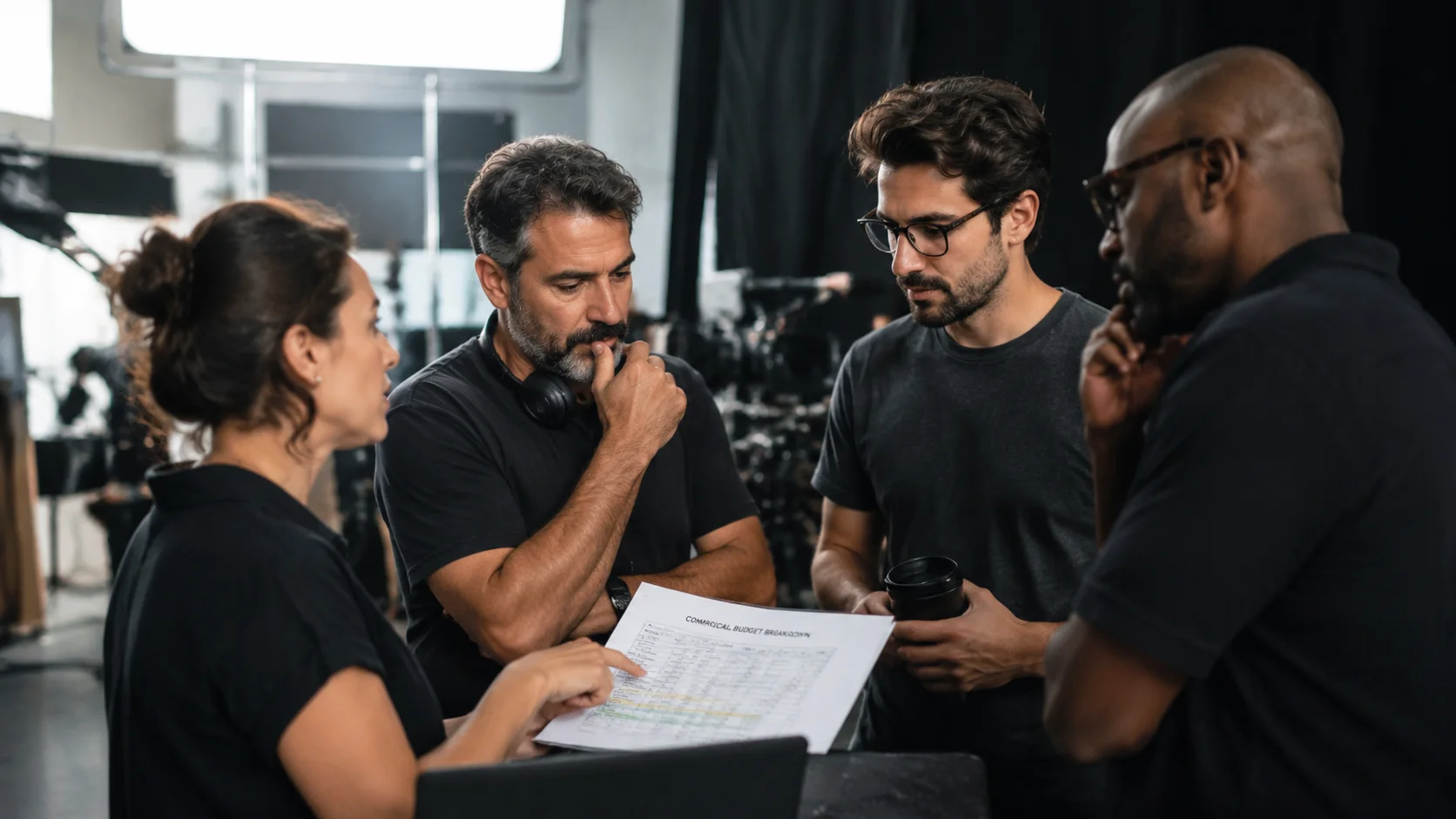
The real cost breakdown of a traditional TV commercial
A traditional TV commercial budget breaks into several major categories. Pre-production costs include concept development, scriptwriting, storyboarding, and casting. A professional scriptwriter typically charges between five hundred and three thousand dollars depending on experience and complexity. Casting directors add another one to two thousand dollars. Location scouting and permits can run from five hundred to five thousand dollars depending on the city and type of location needed.
Production day costs are where the budget escalates quickly. A professional camera package with lenses, lighting, and grip equipment rents for one to five thousand dollars per day. A director of photography charges between one and five thousand dollars per shoot day. Sound recordists, makeup artists, production assistants, and a producer each add several hundred to several thousand dollars. For a union shoot, costs can be two to three times higher due to minimum wage requirements and benefit contributions.
Actor fees and talent costs
Actor compensation is one of the most variable line items. For non-union talent on a local commercial, expect to pay between five hundred and two thousand dollars per actor per shoot day, plus a usage buyout fee that covers how long and in which markets the ad will run. Union actors under SAG-AFTRA contracts require session fees, holding fees, and residuals based on the commercial's airing schedule. A national commercial featuring a recognizable actor can easily cost fifty thousand dollars or more in talent fees alone over a full campaign cycle.
Post-production and editing costs
After the shoot wraps, post-production begins. Professional video editors charge between five hundred and two thousand dollars per day for commercial work. Color grading, sound mixing, music licensing, and motion graphics each add one to three thousand dollars. A thirty-second commercial typically requires two to five days of editing, so post-production alone can run between three and fifteen thousand dollars. If the client requests revisions, costs increase further.
Total cost ranges by production tier
A low-budget local TV commercial produced with a small crew, non-union talent, and basic post-production typically costs between five and twenty thousand dollars. A mid-range regional commercial with professional talent, decent equipment, and polished editing runs between twenty and eighty thousand dollars. A high-end national commercial with union talent, premium directors, elaborate sets, and extensive post-production can cost between one hundred thousand and five hundred thousand dollars or more. For reference, Super Bowl commercials routinely cost five to seven million dollars for production alone, not including the media buy.
How AI is reshaping commercial production costs
AI video generation is fundamentally changing the economics of commercial production. Instead of hiring a full crew for a shoot day, teams can now generate high-quality video ads directly from scripts using AI platforms. The cost per video drops from thousands of dollars to tens of dollars. While AI-generated commercials may not yet fully replace high-end cinematic productions, they are already viable for a wide range of use cases including social media ads, UGC-style testimonials, product demos, and localized variants of existing campaigns.
Platforms like makeads let you write a script, select an AI actor from a catalog of fifty-plus realistic digital humans, and generate a talking-head commercial in minutes. The platform includes built-in dubbing, lip sync, and auto subtitles, so you can create localized versions for multiple markets without re-shooting anything. For a team that needs to produce weekly ad variants for paid social, this reduces the cost per creative from thousands of dollars to a predictable subscription fee, while dramatically increasing the number of variants you can test.
Television commercial script basics
Whether you use traditional production or AI generation, a strong script is the foundation of any effective commercial. A good thirty-second script is typically fifty to seventy words and follows a clear structure: hook the viewer in the first three seconds, identify a specific problem or desire, present the product as the solution with concrete proof, and close with a clear call to action. The script should sound natural when spoken aloud and avoid marketing jargon that breaks the illusion of authenticity. If you are creating short commercials for social media rather than broadcast TV, the same principles apply, but you can experiment with faster pacing and bolder hooks.
Budgeting checklist for your next commercial
- Define your distribution plan first: broadcast TV, connected TV, or social media only.
- Determine whether union or non-union talent is required for your markets.
- Get itemized quotes from at least three production companies or freelancers.
- Factor in music licensing, stock footage, and graphics costs.
- Consider AI video platforms as a cost-effective alternative for high-volume production.
- Always add a fifteen to twenty percent contingency buffer for unexpected costs.
- Evaluate whether a shorter variant for social can deliver the same message at lower cost.
The bottom line is that commercial production costs are highly flexible. By understanding each cost driver and exploring AI-powered alternatives, teams can produce professional video ads at a fraction of traditional budgets while maintaining the testing velocity needed to win in today's fast-moving ad landscape.
How to apply this guide in makeads
Use this guide as a practical checkpoint for planning AI UGC videos, comparing creative angles, and deciding which parts of your workflow should be scripted, generated, reviewed, localized, and tested first.
The most useful next step is to translate the advice into one production brief: define the audience, the opening hook, the proof moment, the actor style, subtitle requirements, and the metric you will use to decide whether a video variant is worth scaling.
Related focus areas for this topic include TV Commercial, Production Costs, Video Budget, Advertising. If you are building a campaign library, connect this guide with your pricing assumptions, platform policy checks, and localization plan before creating the final export.