
Video Production for Brand Commercials in 2026: A Complete Production Guide
A practical guide to video production for brand commercials in 2026: traditional vs AI production costs, TV commercial pricing breakdown, script writing, and how AI is reshaping commercial video production workflows.
Producing a brand commercial has historically been an expensive, months-long process involving agencies, production companies, casting directors, location scouts, and post-production houses. In 2026, that model is being reshaped by AI video tools that compress production timelines and dramatically reduce costs while maintaining professional output quality. This guide covers both traditional and AI-powered approaches to commercial production.
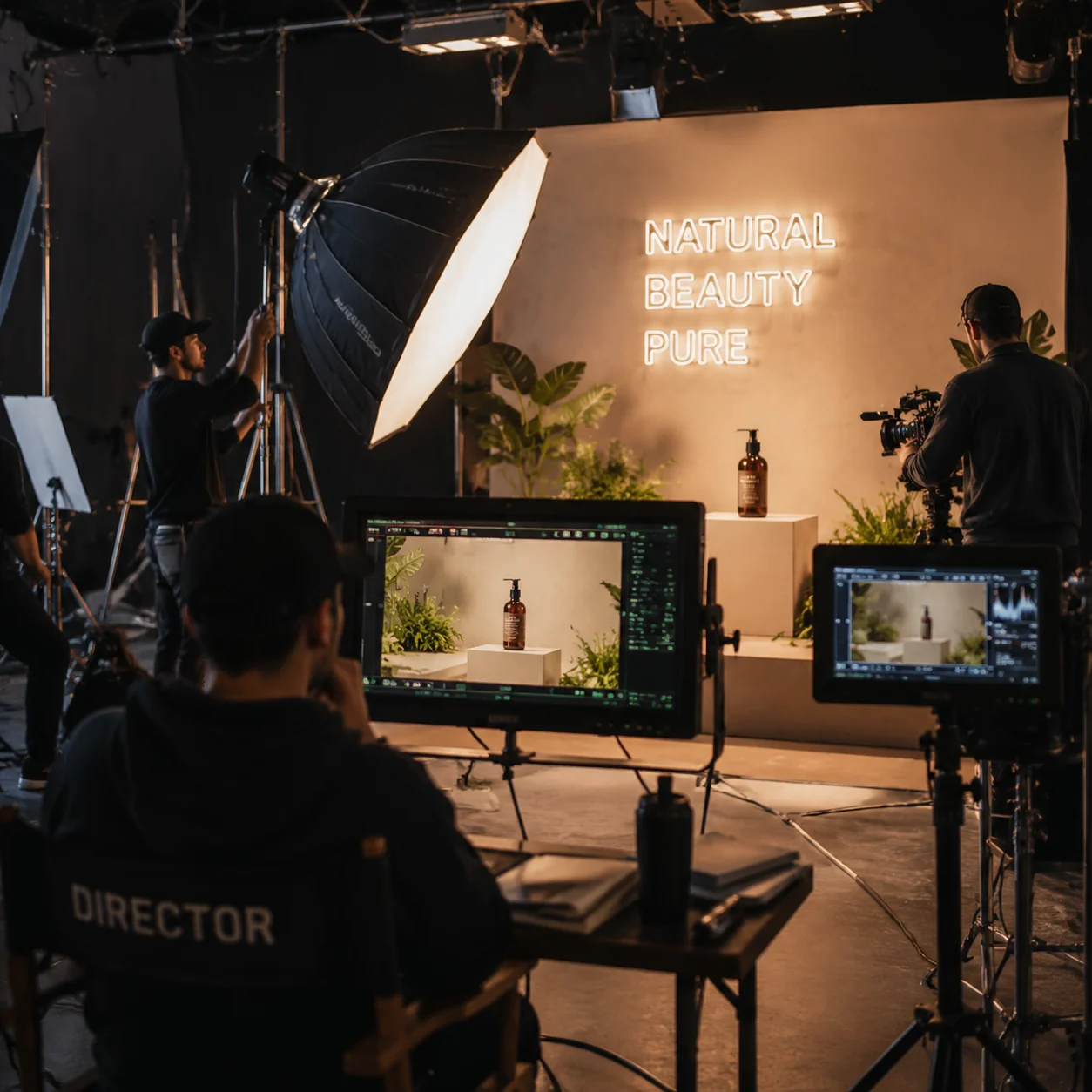
Traditional commercial production costs
Understanding traditional commercial costs provides the baseline for evaluating AI alternatives. A thirty-second television commercial produced through a mid-tier agency and production company typically costs between fifty thousand and two hundred thousand dollars. This includes creative development, casting, location fees, crew, equipment, post-production editing, color grading, sound design, and music licensing. High-end national commercials featuring celebrity talent or complex visual effects can easily exceed half a million dollars for a single thirty-second spot.
The cost structure breaks down roughly as follows: pre-production including concept development, scripting, and storyboarding accounts for about fifteen percent. Production including crew, equipment, location, and talent accounts for roughly fifty percent. Post-production including editing, color correction, sound mixing, and visual effects accounts for about twenty-five percent. The remaining ten percent covers agency fees, music licensing, and miscellaneous expenses. These percentages shift depending on complexity, but the pattern is consistent: production and post-production dominate the budget.
How AI changes commercial production economics
AI video tools fundamentally change the cost structure of commercial production by eliminating or dramatically reducing the most expensive line items. AI talking actors eliminate location shoots, crew costs, and talent fees for many types of commercials, particularly those in the testimonial, explainer, and product demonstration formats. AI dubbing and lip sync eliminate the need for separate productions in each language market. AI video generation can create background environments, product visualizations, and visual effects that previously required expensive post-production houses.
The result is a commercial production model where a brand can produce ten localized variants of a thirty-second spot for approximately the same budget as a single traditional production. This changes not just the cost but the creative strategy: instead of betting the entire budget on one concept, teams can test multiple creative approaches simultaneously, identify winners through performance data, and scale investment behind what actually works rather than what sounded good in a conference room.
Commercial script writing best practices
Whether your commercial is produced traditionally or with AI tools, the script remains the most critical creative asset. Effective commercial scripts share several characteristics: they open with a specific problem or situation the audience recognizes, not with a brand introduction. They demonstrate the product solving the problem visually rather than describing it verbally. They include one clear call to action that the viewer can act on immediately. And they respect the platform context: a television commercial script works differently than a pre-roll ad script, which works differently than a social media commercial script.
For television commercials specifically, the thirty-second format demands extreme economy. Every sentence must earn its place. The most effective structure opens with the problem in the first five seconds, demonstrates the solution in the next fifteen seconds, builds emotional resonance in the following five seconds, and closes with brand and call to action in the final five seconds. This structure respects the viewer's attention while giving each creative element the time it needs to land.
Production formats for different platforms
A common mistake in commercial production is creating one master video and expecting it to work everywhere. Each platform has specific format requirements and viewer expectations that should inform production decisions before shooting or generating begins. Television commercials are typically horizontal at standard broadcast resolution. YouTube pre-roll ads can be horizontal or vertical but benefit from a strong first five seconds since viewers can skip. Facebook and Instagram feed ads work well in square or vertical format with captions for sound-off viewing. TikTok ads must be vertical and native-feeling, shot or generated in 9:16 aspect ratio with platform-appropriate pacing and visual language.
Smart commercial production plans for multiple formats from the start. When using AI tools, generating platform-specific variants is significantly cheaper than reshooting. A single script can be rendered in vertical, square, and horizontal formats with adjusted framing, pacing, and caption placement. This platform-aware production approach ensures the creative investment works across every distribution channel without quality compromises on any single platform.
How to apply this guide in makeads
Use this guide as a practical checkpoint for planning AI UGC videos, comparing creative angles, and deciding which parts of your workflow should be scripted, generated, reviewed, localized, and tested first.
The most useful next step is to translate the advice into one production brief: define the audience, the opening hook, the proof moment, the actor style, subtitle requirements, and the metric you will use to decide whether a video variant is worth scaling.
Related focus areas for this topic include Video Production, Brand Commercials, TV Ads, Commercial Production. If you are building a campaign library, connect this guide with your pricing assumptions, platform policy checks, and localization plan before creating the final export.