
TikTok Ads Creator: How to Make Converting TikTok Ads in 2026
A complete guide to TikTok ads creator tools and workflows. Learn ad specs, hook frameworks, creative testing strategy, and how AI tools help you produce TikTok ads without filming.
TikTok is the hardest ad platform to fake. The audience can smell a traditional commercial in under two seconds, and the algorithm punishes content that does not hold attention. A TikTok ads creator workflow built for this environment looks nothing like a Facebook ad production line. This guide covers the specs, the creative frameworks, and the production tools that help teams ship TikTok ads that actually convert in 2026.
What is a TikTok ads creator?
A TikTok ads creator is any person, team, or tool that produces video ads designed specifically for the TikTok platform. That distinction matters because TikTok rewards content that matches its native format: vertical, fast-paced, front-facing, and built around a strong opening hook. Repurposing a horizontal brand video with letterboxing almost always underperforms.
The term covers two things. First, the creative role: the person who writes hooks, scripts the delivery, and structures the ad. Second, the tool category: software and platforms that help generate, edit, or assemble TikTok-ready video ads. Both are needed, and the best results come when the creative discipline and the production tool work together.
TikTok ad specs every creator must know
Before writing a single hook, lock the technical requirements. TikTok ad specs are not optional details. They determine whether your creative fills the screen correctly and whether it survives the platform's review process.
- Aspect ratio — 9:16 vertical is the standard. 1:1 square is accepted but underperforms in the feed.
- Resolution — At least 720x1280 pixels. Higher resolution is preferred for crisp playback.
- Length — 5 to 60 seconds for most ad placements. The sweet spot for cold audiences is 15 to 30 seconds.
- Safe zones — Keep text and product proof away from the bottom, right, and top edges where platform UI overlaps.
- Sound — TikTok is a sound-on platform. Use clear voiceover or trending audio. Do not ship silent ads.
- Subtitles — Burn in captions regardless, because many users scroll with sound off in public.
The TikTok hook framework that stops the scroll
On TikTok, the first two seconds decide everything. If the hook does not create instant relevance, the viewer scrolls and the algorithm stops serving the ad. The most reliable way to engineer a strong opening is to use a hook framework instead of brainstorming randomly.
A hook framework pairs a specific viewer pain with a specific opening style. Pick three pains your audience recognizes and three opening styles, then combine them to generate nine testable hooks.
- Direct problem — Name the pain immediately. Example: “If your ads die after three days, this is why.”
- Surprising claim — Lead with a counterintuitive fact. Example: “The best-performing TikTok ad cost twelve dollars to make.”
- Personal discovery — Open with a relatable story. Example: “I wasted six months on ad creative before I figured this out.”
- Objection reversal — Address the doubt head-on. Example: “You probably think AI ads look fake. Watch this.”
- Result first — Show the outcome before the method. Example: “This is what a 4x ROAS TikTok creative looks like.”
How to create TikTok ads that convert
Producing a TikTok ad is not the same as producing a brand video. The process should be built for speed, volume, and controlled testing. Here is a production workflow that works for small teams and scaled agencies alike.
- Lock the brief. Define one audience, one pain, one promise, and one proof asset before writing.
- Generate a hook batch. Write five to nine hooks using the framework above. Do not write full scripts yet.
- Pick the strongest hooks. Select two or three based on clarity and relevance to the audience.
- Write one master script per hook. Keep it under 75 words for a 30-second spot. Show proof before the midpoint.
- Produce the video. Use a creator, stock footage, or an AI video generator to turn the script into a vertical video.
- Add captions and safe-zone checks. Burn in readable subtitles and confirm no important visuals sit under platform UI.
- Export and test. Launch the batch and judge each variant by the single variable it changes.
Using AI tools as a TikTok ads creator
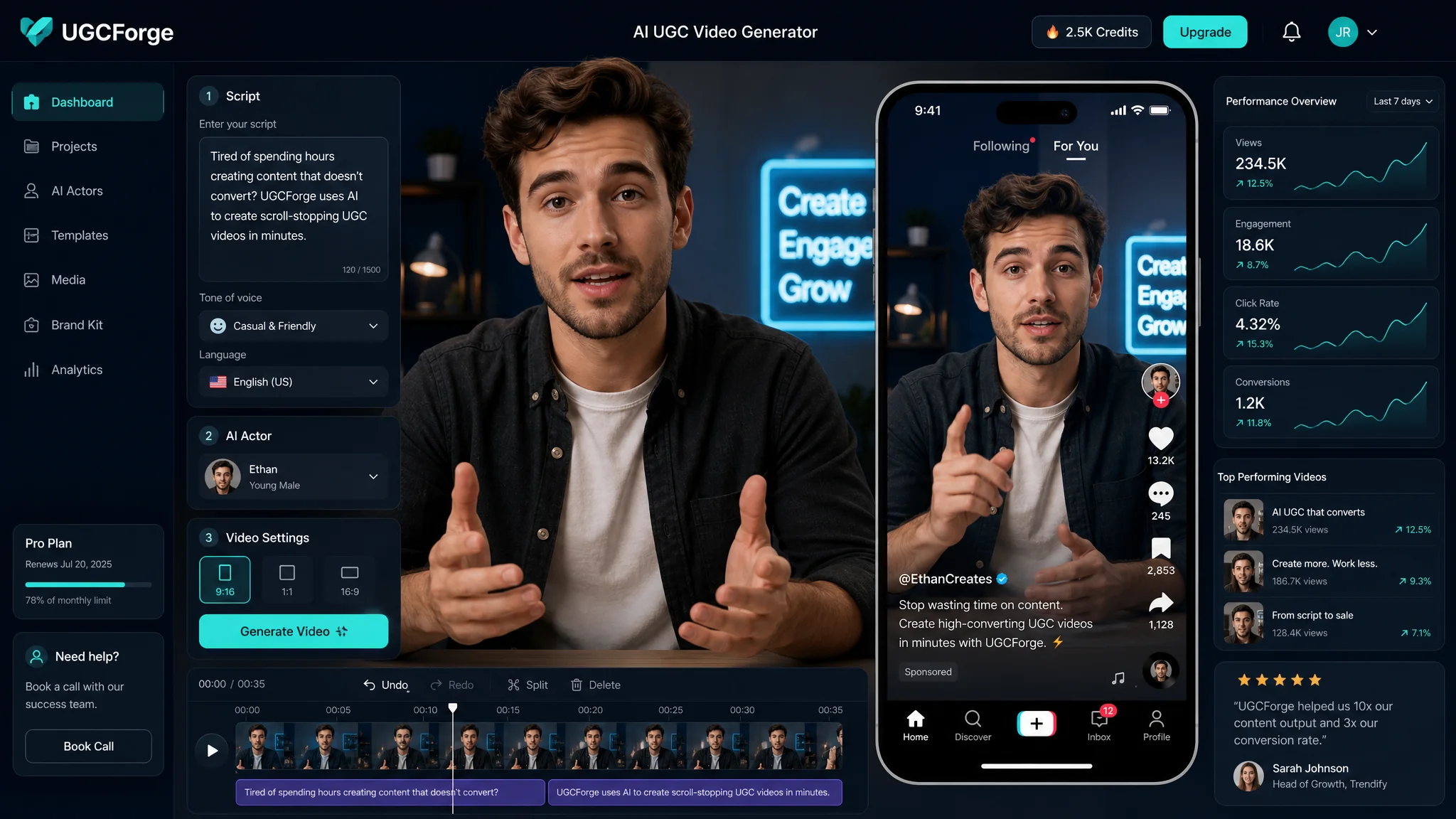
The biggest shift in TikTok ad production over the past year has been the rise of AI creator tools. Instead of booking a creator for every hook test, teams now generate talking-head UGC videos from scripts. This compresses the production cycle from weeks to hours and makes high-volume creative testing financially viable.
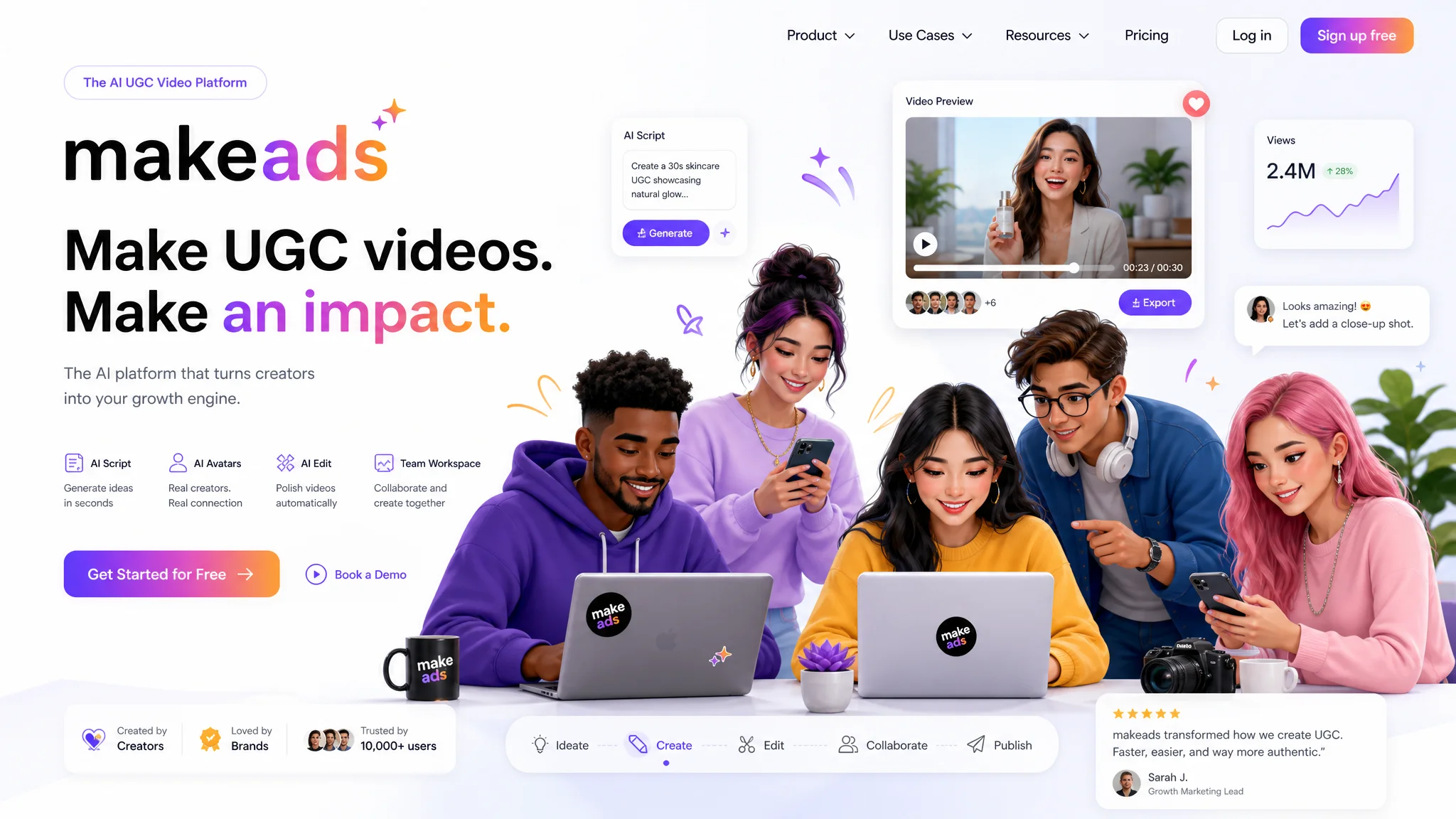
makeads is built for exactly this workflow. You pick an AI actor that matches your target persona, write a script, and generate a vertical UGC video with voiceover, subtitles, and lip sync. The output is designed to look like native TikTok content, not a corporate ad. Multi-language dubbing lets you scale winning creatives into international markets without re-shooting anything.
- No camera required — Generate talking-head videos from a script in minutes.
- Consistent quality — AI actors deliver the same script reliably across dozens of variants.
- Built-in localization — Dub winning ads into multiple languages for cross-market scaling.
- Faster iteration — Test a new hook the same day the brief is approved.
Creative testing strategy for TikTok ads
TikTok rewards volume, but only if the volume is disciplined. Testing randomly produces noise, not learning. The goal is to change one variable per batch so that performance differences can be attributed to a specific creative choice.
- Batch one: hooks. Keep actor, proof, and CTA identical. Change only the opening line.
- Batch two: proof. Once the best hook is found, test different proof framings with that hook locked.
- Batch three: call to action. With hook and proof stable, test CTA language and offer framing.
- Batch four: actors. Test different personas against the proven script to find the best match.
- Batch five: localization. Dub the winner into new languages and compare performance per market.
This layered approach is what separates teams that scale on TikTok from teams that burn budget. Each batch produces a clear answer that informs the next one, and within a few cycles the creative library compounds into a reliable performance engine.
What metrics to watch
Final purchase numbers are not enough to guide creative decisions on TikTok. Early-funnel signals tell you which creative choices are working before the conversion data matures.
- Hook rate — Percentage of viewers who watch past the first three seconds. Measures hook strength.
- Hold rate — Average watch time relative to video length. Measures sustained attention.
- Click-through rate — How often viewers tap the CTA. Measures offer and creative alignment.
- Conversion rate — How often clicks lead to the target action. Measures landing page and offer fit.
- Cost per result — The bottom-line efficiency metric that determines whether the ad scales.
TikTok ads creator mistakes to avoid
- Repurposing horizontal video — Letterboxed ads signal brand content and get skipped.
- Slow openings — Logo animations and brand intros burn the most valuable seconds.
- Ignoring safe zones — Important text hidden behind TikTok UI makes the ad unreadable.
- Sound-off production — TikTok is sound-on. Music and voiceover matter as much as visuals.
- Testing too many variables at once — When everything changes, you cannot tell what worked.
- Underproducing — One ad is not a test. Ship enough variants to learn before scaling spend.
Scaling TikTok ads across markets
Once a TikTok ad wins in one market, the fastest way to scale is localization rather than rebuilding from scratch. Translate the proven script, dub the voiceover, adjust the subtitles, and test the localized version against the original. Most of the creative learning transfers, and the cost per market drops dramatically compared to producing each version separately.
This is where AI creator tools deliver the biggest leverage. A winning script can become ten localized videos in the time it would take to brief a single human creator. The result is a creative pipeline that scales horizontally without scaling production overhead.
Start creating TikTok ads that perform
TikTok is unforgiving to lazy creative, but it rewards teams that respect the format. Lock your specs, engineer your hooks with a framework, test one variable at a time, and use AI tools to produce volume without sacrificing authenticity. makeads gives you the AI actors, script-to-video pipeline, and localization needed to run this workflow at scale, so you can spend more time learning from results and less time waiting on production.
How to apply this guide in makeads
Use this guide as a practical checkpoint for planning AI UGC videos, comparing creative angles, and deciding which parts of your workflow should be scripted, generated, reviewed, localized, and tested first.
The most useful next step is to translate the advice into one production brief: define the audience, the opening hook, the proof moment, the actor style, subtitle requirements, and the metric you will use to decide whether a video variant is worth scaling.
Related focus areas for this topic include TikTok Ads, Video Ads, AI UGC, Social Advertising, Creator Tools. If you are building a campaign library, connect this guide with your pricing assumptions, platform policy checks, and localization plan before creating the final export.