
How Much Does Sora 2 Cost? Complete Pricing Guide for 2026
A detailed breakdown of Sora 2 pricing, subscription options, credit usage, and how to optimize your video generation budget with OpenAI's latest text-to-video model.
Sora 2 represents OpenAI\'s most advanced text-to-video generation model, capable of creating stunning video content from simple text prompts. Understanding its pricing structure helps you plan your video production budget effectively and avoid unexpected costs as you scale your creative output.
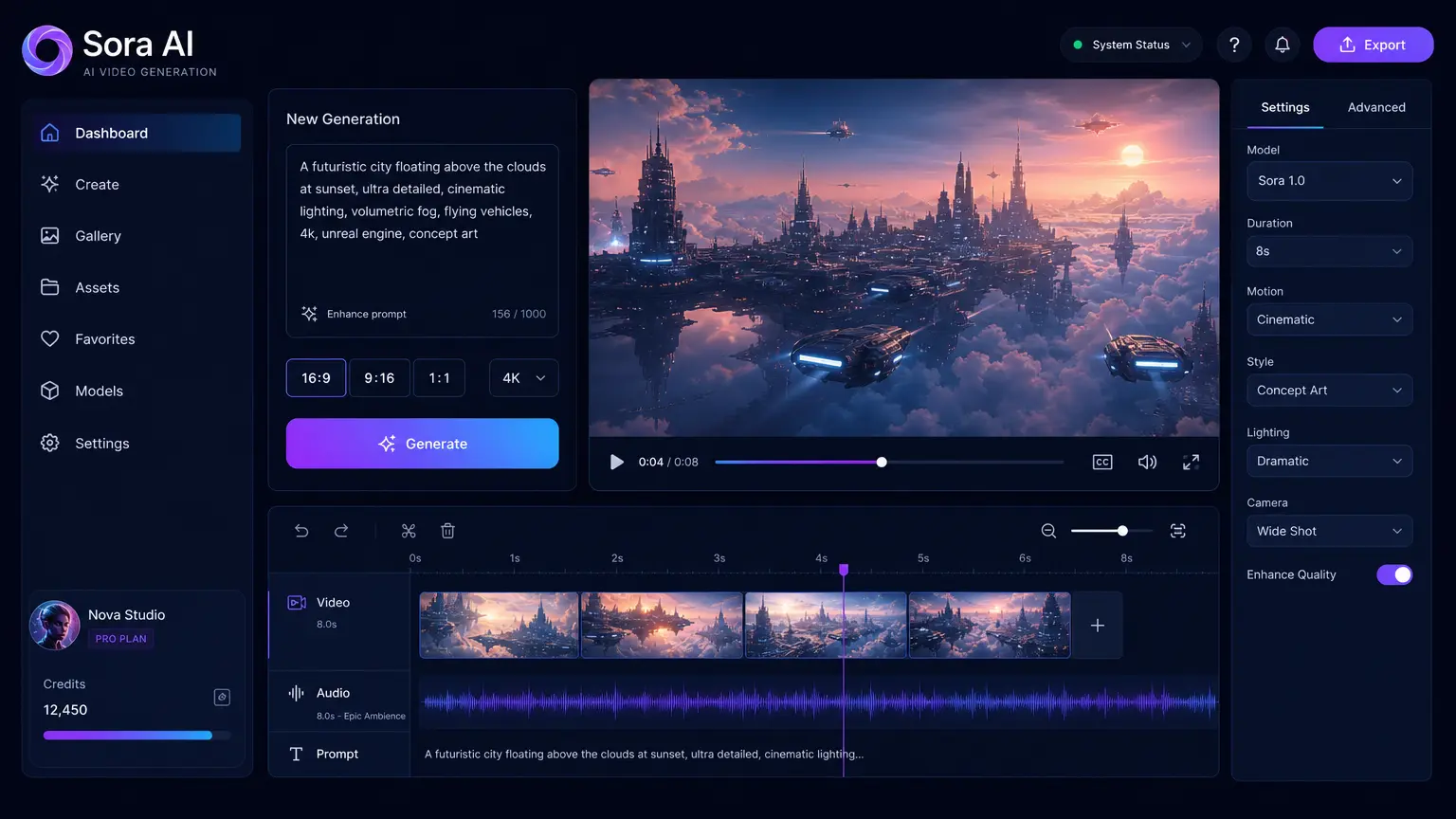
Understanding Sora 2 pricing model
Sora 2 uses a credit-based pricing system where different video generations consume varying amounts of credits based on duration, resolution, and generation complexity. Unlike flat-rate subscriptions, this model charges based on actual usage, making it flexible for teams with varying production needs.
The base tier starts with shorter video generations at standard resolution, while longer videos and higher resolutions consume proportionally more credits. A typical fifteen-second video at 1080p resolution uses fewer credits than a sixty-second video at 4K resolution. This granular pricing allows teams to optimize their budget by matching video specifications to actual project requirements.
Subscription tiers explained
OpenAI offers multiple subscription tiers for Sora 2 access. The individual creator tier provides a monthly credit allocation suitable for small-scale video production. The professional tier increases credit allocation and adds priority generation, which reduces wait times during peak usage periods. Enterprise tiers offer custom credit packages, dedicated support, and advanced features like team collaboration tools and API access for integration into existing production workflows.
Each tier includes a baseline credit allocation that resets monthly. Unused credits typically do not roll over, so teams should plan their production calendar to maximize their monthly allocation. Additional credits can be purchased beyond the subscription allocation, usually at a higher per-credit rate.
Cost per video generation
Individual video generation costs depend on several factors. Duration is the primary driver, with longer videos requiring more credits. Resolution affects cost, with 4K generation consuming approximately four times the credits of 1080p generation. Complexity of the prompt also influences generation time and credit consumption. Videos requiring complex scene compositions, multiple subjects, or intricate motion patterns may use additional credits.
For budget planning, estimate that a fifteen-second 1080p video generation uses approximately one to two credits, while a sixty-second 4K generation may consume eight to twelve credits. These are approximate values, and actual consumption varies based on generation parameters and current platform capacity.
Comparing Sora 2 to alternatives
When evaluating Sora 2 pricing against alternatives like Runway Gen-3, Pika Labs, or Kling AI, consider the total cost of production rather than per-video pricing alone. Sora 2\'s higher quality output may reduce the number of generations needed to achieve a usable result, effectively lowering the cost per final video.
Alternative platforms may offer lower per-generation costs but require more iterations to achieve acceptable quality. Factor in the time cost of multiple generations, prompt engineering effort, and the value of faster iteration cycles when comparing total production economics.
Optimizing your Sora 2 budget
Start with shorter, lower-resolution generations to validate concepts before committing credits to longer, higher-resolution outputs. Use detailed prompts that clearly specify the desired output to reduce the number of regeneration attempts. Batch similar generations together to maintain consistency and reduce the learning curve for prompt optimization.
Track your credit consumption across different project types to identify patterns. Some use cases may consistently require more credits due to inherent complexity. Use this data to adjust subscription tier selection and project budgeting for future productions.
Hidden costs to consider
Beyond direct generation costs, consider ancillary expenses. Prompt engineering time represents a significant investment, especially when learning the platform. Post-processing needs vary, with some outputs requiring additional editing, color correction, or compositing. Storage costs for generated videos, especially at 4K resolution, accumulate over time.
Factor these secondary costs into your total budget. A lower per-generation cost that requires extensive post-processing may be more expensive than a higher-cost generation that produces nearly-ready output.
Getting started efficiently
Begin with the tier that matches your anticipated monthly usage. Start with shorter videos to learn prompt optimization without exhausting credits. Track results systematically to identify which prompt structures produce acceptable outputs with minimal iterations. Scale duration and resolution only after establishing reliable prompt patterns.
Sora 2\'s pricing reflects its position as a premium text-to-video solution. Teams that invest in understanding the platform\'s capabilities and optimizing their prompt strategy can achieve strong value from the investment. The key is treating credit consumption as a measurable metric that improves with systematic learning and iteration.
How to apply this guide in makeads
Use this guide as a practical checkpoint for planning AI UGC videos, comparing creative angles, and deciding which parts of your workflow should be scripted, generated, reviewed, localized, and tested first.
The most useful next step is to translate the advice into one production brief: define the audience, the opening hook, the proof moment, the actor style, subtitle requirements, and the metric you will use to decide whether a video variant is worth scaling.
Related focus areas for this topic include Sora AI, Video Generation, AI Pricing, OpenAI. If you are building a campaign library, connect this guide with your pricing assumptions, platform policy checks, and localization plan before creating the final export.