
Best UGC Video Makers for Creating YouTube Shorts: A Marketer Selection Guide
How to choose UGC video makers for YouTube Shorts, including hook writing, vertical pacing, captions, actor fit, batch production, and performance review.
The best UGC video makers for creating YouTube Shorts help marketers produce short, useful, vertical videos that earn attention fast. Shorts are not just smaller versions of long videos. They need tighter openings, clearer visual proof, readable captions, and a production workflow that can ship several variants without exhausting the team.
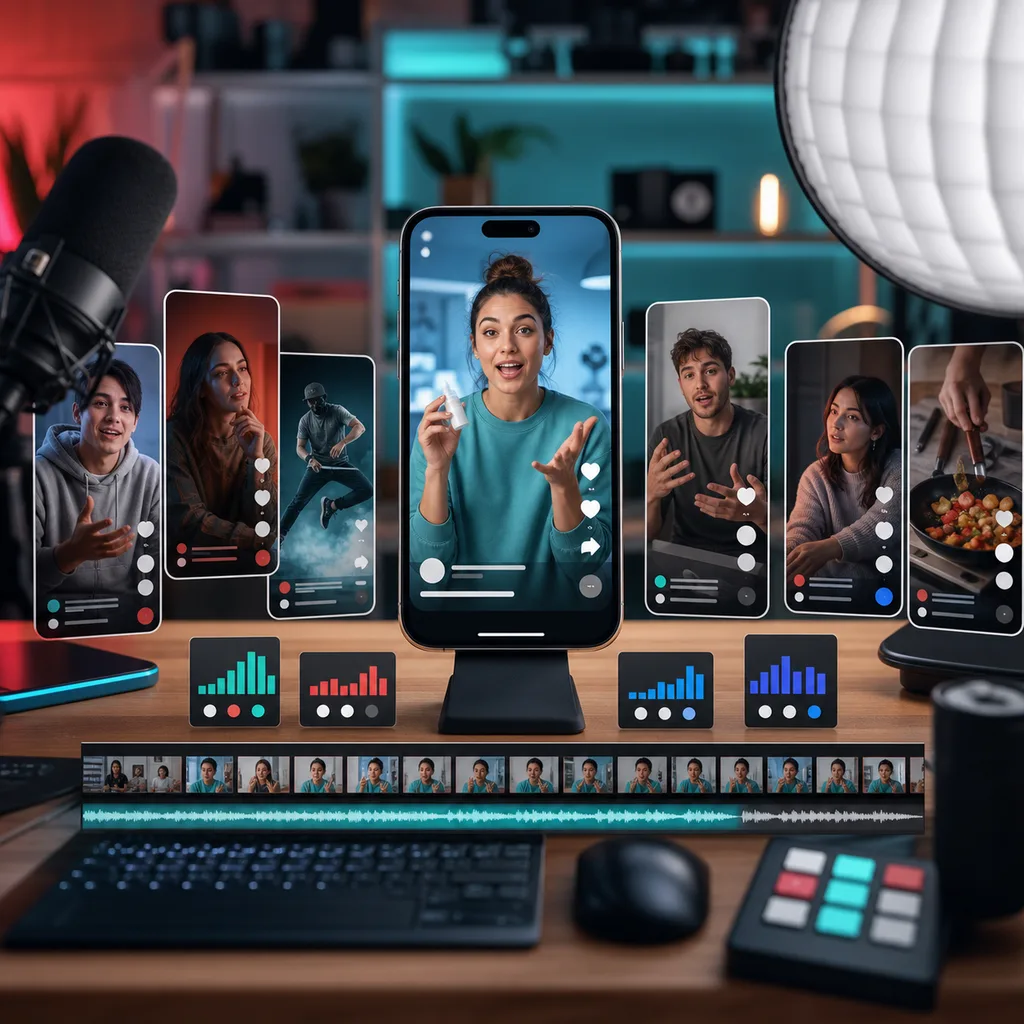
What makes Shorts different
Shorts compete in a high-speed feed where viewers decide quickly whether a video is worth another second. A UGC video maker for this format should make the first line easy to test. It should also make proof visible early. A talking actor alone is not enough if the product, result, or key visual appears too late. Think of each Short as a compact argument: here is the problem, here is the proof, here is what to do next.
Core features to look for
Choose a tool that supports vertical framing, clean captions, fast script edits, repeatable actor style, and simple export. For UGC specifically, the tool should help the speaker sound conversational. If every output feels like a corporate readout, the video will struggle in Shorts. Look for preview speed as well. Marketers need to watch a draft, adjust the hook, and regenerate without waiting through a full production cycle.
Writing hooks for Shorts
Start with a viewer problem, not a brand introduction. Strong openings often begin with a direct pain, a surprising observation, a quick comparison, or an objection. For example, a productivity app might test time waste, messy handoff, and missed deadline angles. Keep the proof and CTA stable while testing those hooks. That way, performance data tells you which opening earns attention instead of mixing too many variables.
How AI UGC video makers help
AI UGC tools are useful for Shorts because they make batch production realistic. A team can generate five hook variants, try two actor personas, and localize the strongest message into additional languages. This is hard to do with traditional shoots because each change creates scheduling and editing overhead. With an AI workflow, the limiting factor becomes creative judgment, not calendar availability.
Review the video like a mobile viewer
Before publishing, watch the Short on a phone. Check whether captions fit without covering the product. Confirm that the first sentence makes sense without context. Make sure the CTA does not require too many steps. If the product proof is visual, pause the video at three seconds and ask whether a new viewer would understand what is being sold. If not, move the proof earlier.
Build a repeatable Shorts system
A good UGC video maker should support a weekly production rhythm. On day one, pick the campaign goal and write hook options. On day two, generate drafts. On day three, review on mobile and edit. On day four, publish a small batch. On day five, read early signals and plan the next batch. This rhythm keeps Shorts from becoming random posting and turns the channel into a testing engine.
The best UGC video maker for YouTube Shorts is the one that keeps creative decisions organized. Fast generation is useful only when the team can connect each Short to a hypothesis, a target audience, and a measurable result.
How to apply this guide in makeads
Use this guide as a practical checkpoint for planning AI UGC videos, comparing creative angles, and deciding which parts of your workflow should be scripted, generated, reviewed, localized, and tested first.
The most useful next step is to translate the advice into one production brief: define the audience, the opening hook, the proof moment, the actor style, subtitle requirements, and the metric you will use to decide whether a video variant is worth scaling.
Related focus areas for this topic include YouTube Shorts, UGC Video, Short-Form Ads, Creative Testing. If you are building a campaign library, connect this guide with your pricing assumptions, platform policy checks, and localization plan before creating the final export.