
AI Influencer Generator: How to Create Virtual Brand Ambassadors for Campaigns
A guide to using an AI influencer generator for brand campaigns, covering virtual presenter creation, script matching, audience trust, compliance, and scaling influencer-style content.
An AI influencer generator creates virtual presenters that can deliver brand messages in a style that mimics human social media creators. For marketing teams, this opens an interesting possibility: producing influencer-style content without the logistical complexity of sourcing, negotiating, briefing, shipping products, managing NDAs, and waiting for deliverables. The key question is not whether AI influencers can look realistic. It is whether the audience trusts a virtual presenter enough to act on the recommendation.
How AI influencer generators work
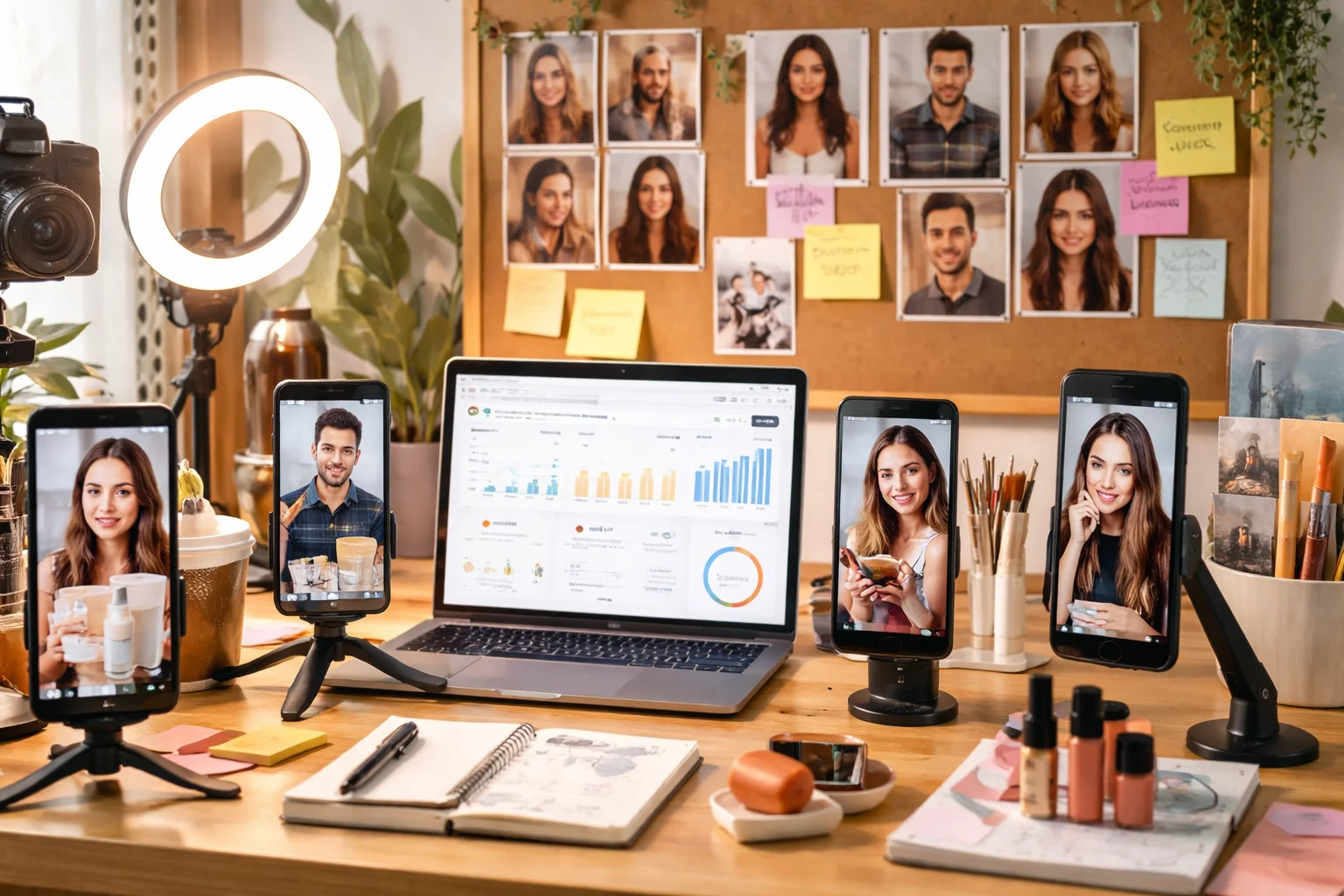
An AI influencer generator uses a combination of pre-trained actor models, voice synthesis, and lip-sync technology to create a video of a virtual person speaking a script. The user selects a demographic profile, voice style, and expression range, then inputs the script. The generator outputs a video that looks and sounds like a real person delivering the lines. Modern tools offer a range of ethnicities, ages, and presentation styles, making it possible to match the virtual influencer to the target audience without casting a real actor. Some tools also allow custom branding, clothing, and background settings.
The technology has improved significantly. Early AI influencers were easy to identify by stiff facial expressions and unnatural voice pacing. Current generators produce believable delivery with micro-expressions, natural pauses, and synchronized lip movement. The gap between AI-generated and human-recorded content has narrowed to the point where many viewers cannot reliably distinguish them in a short-form social feed. This opens the door for brands to produce influencer-style content at a fraction of the traditional cost and turnaround time.
Use cases for brand campaigns
The strongest use cases for an AI influencer generator are product testimonials, tutorial-style demos, comparison reviews, social proof ads, and localized influencer content across multiple markets. A brand selling fitness equipment can create a virtual trainer who demonstrates the product and shares a testimonial. A beauty brand can create a virtual reviewer who shows the product application and result. A SaaS company can create a virtual power user who explains a workflow improvement. In each case, the AI influencer delivers a consistent message without variation in quality, schedule, or performance.
Localization is one of the strongest arguments for using AI influencers. A single virtual presenter can be dubbed and lip-synced into multiple languages while maintaining the same facial performance. This is practically impossible with human influencers, who would need to reshoot each language version. For brands running campaigns in five or more markets, the efficiency gain is substantial. The same script, proof, and visual structure can be adapted to each market without starting the production process from scratch.
Audience trust considerations
Not every audience is ready to trust an AI influencer. Older demographics and high-consideration purchase categories may respond better to human presenters. The key is matching the virtual presenter to the context. For low-consideration products like consumer goods, accessories, or digital tools, an AI influencer can be highly effective. For high-trust categories like healthcare, financial services, or legal products, the audience may expect a human expert. Testing the AI influencer against a human presenter for the same product is the best way to determine whether the virtual approach resonates with a specific audience segment.
Transparency also matters. Some markets have disclosure requirements for AI-generated content in advertising. Brands should check local regulations and consider adding a subtle disclosure if the influencer is entirely AI-generated. Transparency protects the brand from backlash and builds long-term trust with the audience.
Integrating AI influencers into a production workflow
An AI influencer generator is most effective when integrated into a structured ad production workflow. Start with the same disciplined brief used for human-created ads: define the audience, problem, promise, proof, and constraint. Then select the AI influencer profile that matches the buyer persona. Write the script for spoken delivery with short sentences and natural phrasing. Add visual proof: product close-ups, screen recordings, comparison shots, or result demonstrations. Generate subtitles for silent viewing. Review the output on a mobile device before exporting.
Makeads provides this integrated workflow, connecting AI influencer selection with script writing, proof integration, subtitle generation, localization, and variant management. The AI influencer becomes one component of a repeatable ad production system rather than a standalone experiment. This approach gives teams the speed of AI-generated presenters without sacrificing the creative discipline that makes ads work.
How to apply this guide in makeads
Use this guide as a practical checkpoint for planning AI UGC videos, comparing creative angles, and deciding which parts of your workflow should be scripted, generated, reviewed, localized, and tested first.
The most useful next step is to translate the advice into one production brief: define the audience, the opening hook, the proof moment, the actor style, subtitle requirements, and the metric you will use to decide whether a video variant is worth scaling.
Related focus areas for this topic include AI Influencer Generator, AI Influencer, Virtual Influencer, Brand Campaigns. If you are building a campaign library, connect this guide with your pricing assumptions, platform policy checks, and localization plan before creating the final export.