
The FaceTime Era: Producing Casual AI UGC Ads That Convert
Discover why low-fi, authentic "FaceTime-style" AI UGC ads are dominating performance marketing and how to create them with AI actors.
In the fast-evolving landscape of digital advertising, a noticeable shift has occurred. The era of highly polished, studio-grade video ads is giving way to something more intimate, more authentic: the "FaceTime era" of casual, unpolished User-Generated Content (UGC). This trend, amplified by platforms like TikTok and Instagram Reels, embraces raw authenticity, making ads feel less like promotions and more like genuine recommendations from a friend. Performance marketers are finding that these low-fidelity, talking-head videos, especially when powered by AI actors, are driving unprecedented engagement and conversions.
The Irresistible Rise of Raw Authenticity in Ad Creative
Gone are the days when high production value automatically signaled trustworthiness. Today's digital natives, particularly Gen Z and millennials, are adept at spotting inauthenticity. They crave realness, and this preference has reshaped what constitutes effective ad creative. The 'FaceTime style' ad, characterized by its direct-to-camera address, natural lighting, and often portrait-mode framing, mimics the organic content users see from their friends and favorite creators.
This shift isn't just aesthetic; it's strategic. Platforms reward content that keeps users engaged, and casual, storytelling formats often outperform slick, overtly commercial spots. The perceived spontaneity and relatability of these videos break through the ad fatigue, making your message feel less intrusive and more like a helpful discovery.
Why Casual AI UGC Ads Outperform Polished Campaigns
The success of casual AI UGC isn't accidental; it's rooted in fundamental psychological principles that drive consumer behavior:
- Builds Trust: Unpolished content often feels more honest. When an AI actor delivers a message in a natural, conversational tone, it bypasses the skepticism often associated with traditional advertising. It feels like a genuine, unsolicited endorsement.
- Enhances Relatability: Viewers are more likely to connect with content that mirrors their own communication style. A 'FaceTime' aesthetic feels personal, like a direct conversation rather than a broadcast.
- Breaks Through Ad Fatigue: In a crowded digital space, anything that deviates from the typical 'ad look' stands out. Casual UGC feels less like an advertisement and more like organic content, making it less likely to be scrolled past.
- Fosters Community: This style of content often invites interaction and discussion, fostering a sense of community around your brand, much like a trusted influencer would.
Leveraging AI actors for this style allows brands to scale authenticity without the logistical challenges and costs of traditional UGC sourcing.
Crafting 'Off-the-Cuff' Scripts for AI Actors
The secret to a successful casual AI UGC ad lies in a script that sounds anything but scripted. Here's how to write for authenticity:
- Embrace Conversational Language: Write as if you're talking to a friend. Use contractions, natural pauses, and even a few 'um's or 'like's if it fits your brand's voice. AI script generation tools can help kickstart this process.
- Start with a Strong, Relatable Hook: Instead of a direct sales pitch, begin with a question, a common pain point, or a personal anecdote. Examples: "You know when you're trying to...?" or "Hey guys, I just found this amazing hack for..."
- Focus on Storytelling, Not Selling: Frame your product as the solution to a problem, told through a mini-narrative. How did it help someone (even a fictional persona)?
- Integrate CTAs Naturally: Don't just slap a "Buy Now" at the end. Weave your call-to-action into the conversation. "If you're struggling with X, you've got to check out Y – I've linked it below."
- Keep it Concise and Paced: While it should feel unscripted, it still needs to be efficient. Aim for short, impactful sentences and allow for natural pauses that an AI actor can convey.
- Inject Imperfection (Subtly): While AI actors deliver perfect speech, your script can imply a more spontaneous, less rehearsed feel. Think about direct address, slightly informal sentence structures, and a friendly tone.
Producing the Low-Fi Look with AI Actors
Achieving the 'FaceTime era' aesthetic with AI actors is surprisingly straightforward. It's about making deliberate choices to mimic casual phone recordings:
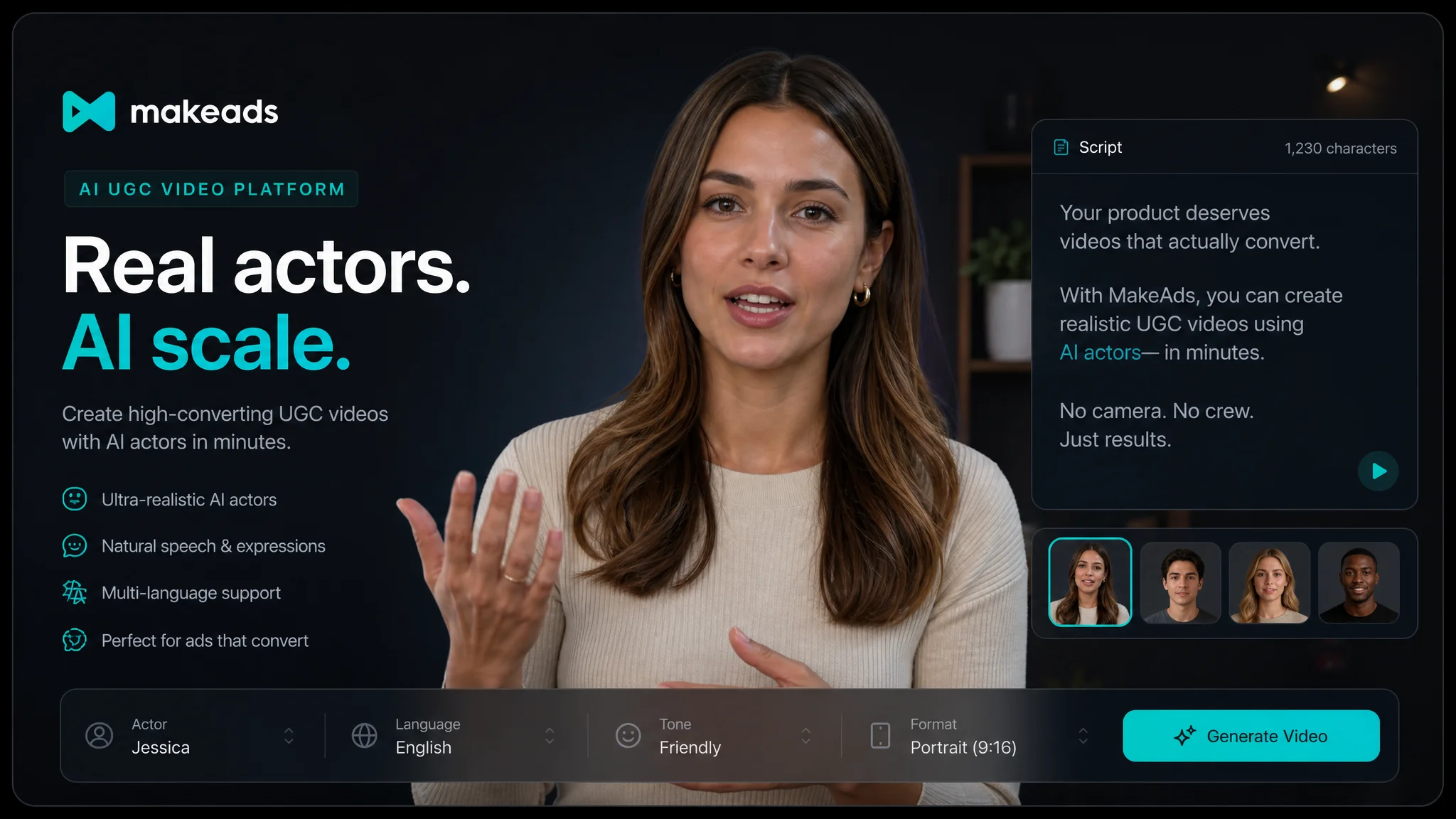
- Aspect Ratio: Prioritize vertical formats. 9:16 is king for TikTok, Reels, and YouTube Shorts. This immediately signals mobile-first content.
- Framing: Opt for close-up shots of your AI actor. Think head-and-shoulders, as if they're holding the phone themselves.
- Backgrounds: Avoid sterile white or overly professional studio settings. Choose simple, relatable backgrounds – a slightly blurred home office, a cozy living room, or even a plain wall. The goal is to feel accessible, not aspirational.
- Pacing and Delivery: Use AI actors that can deliver lines with natural intonation and pacing. Avoid overly dramatic or 'announcer' voices. The Lip Sync feature ensures the AI actor's mouth movements perfectly match the casual script.
- Minimal Post-Production: Resist the urge for heavy editing, complex transitions, or excessive graphics. The beauty is in the raw, unadorned delivery. Focus on clear audio and natural visual flow.
- Authentic Lighting: While AI actors are rendered, the perceived lighting should feel natural – as if from a window or a simple lamp, not a full studio setup.
Maximizing Impact: Captions and A/B Testing
Even the most authentic AI UGC ad can be overlooked if not optimized for audience consumption habits. Always include:
- Auto Subtitles & Translation: A vast majority of social media content is consumed without sound. Clear, concise captions are non-negotiable. Platforms like makeads offer Auto Subtitles & Translation, ensuring your message is accessible and impactful even on mute.
- Multi-Language Dubbing: To expand your reach beyond English-speaking audiences while maintaining the authentic feel, leverage Multi-Language Dubbing or Dub Translation. This allows your casual AI actor to speak directly to diverse markets.
Finally, never underestimate the power of A/B testing. Experiment with different AI actors, script variations (more casual vs. slightly more informative), and visual styles within the 'FaceTime era' aesthetic. Compare performance metrics like click-through rates, watch time, and conversion rates to continuously refine your strategy.
Getting started
The 'FaceTime era' of advertising is here to stay, and marketers who embrace its authentic, low-fi aesthetic will be the ones who truly connect with their audiences. Creating compelling, casual UGC with AI actors doesn't require a film crew or a massive budget. Platforms like makeads empower teams to script, generate, and export these high-performing videos in minutes.
With makeads, you can choose from 50+ realistic AI Actors, generate scripts with AI hooks and CTAs, and utilize features like Multi-Language Dubbing, Auto Subtitles & Translation, and precise Lip Sync. Export your final ads in optimal aspect ratios for Meta, TikTok, YouTube Shorts, and Google Ads, ensuring your casual content looks perfect on any platform. Transform your marketing strategy and start producing authentic, conversion-driving AI UGC today.
makeads is an independent product and is not affiliated with or endorsed by any model or platform provider.
How to apply this guide in makeads
Use this guide as a practical checkpoint for planning AI UGC videos, comparing creative angles, and deciding which parts of your workflow should be scripted, generated, reviewed, localized, and tested first.
The most useful next step is to translate the advice into one production brief: define the audience, the opening hook, the proof moment, the actor style, subtitle requirements, and the metric you will use to decide whether a video variant is worth scaling.
Related focus areas for this topic include AI Video Marketing, UGC Ads, Casual Content, TikTok Marketing, Performance Marketing. If you are building a campaign library, connect this guide with your pricing assumptions, platform policy checks, and localization plan before creating the final export.