
Ad Creative AI Pricing Guide 2026: How Much Do AI Ad Creators Really Cost?
A complete breakdown of AI ad creative tool pricing in 2026, including makeads, AdCreative.ai, Pencil, and more. Compare costs, find the best value for your budget, and calculate total cost of ownership for your marketing team.
AI ad creative tools have transformed how marketing teams produce content, but pricing varies dramatically across platforms. Understanding what each tool actually costs, including hidden fees, credit systems, and scaling expenses, helps you make a smarter investment for your team. This guide breaks down the real pricing of every major AI ad creative platform in 2026.
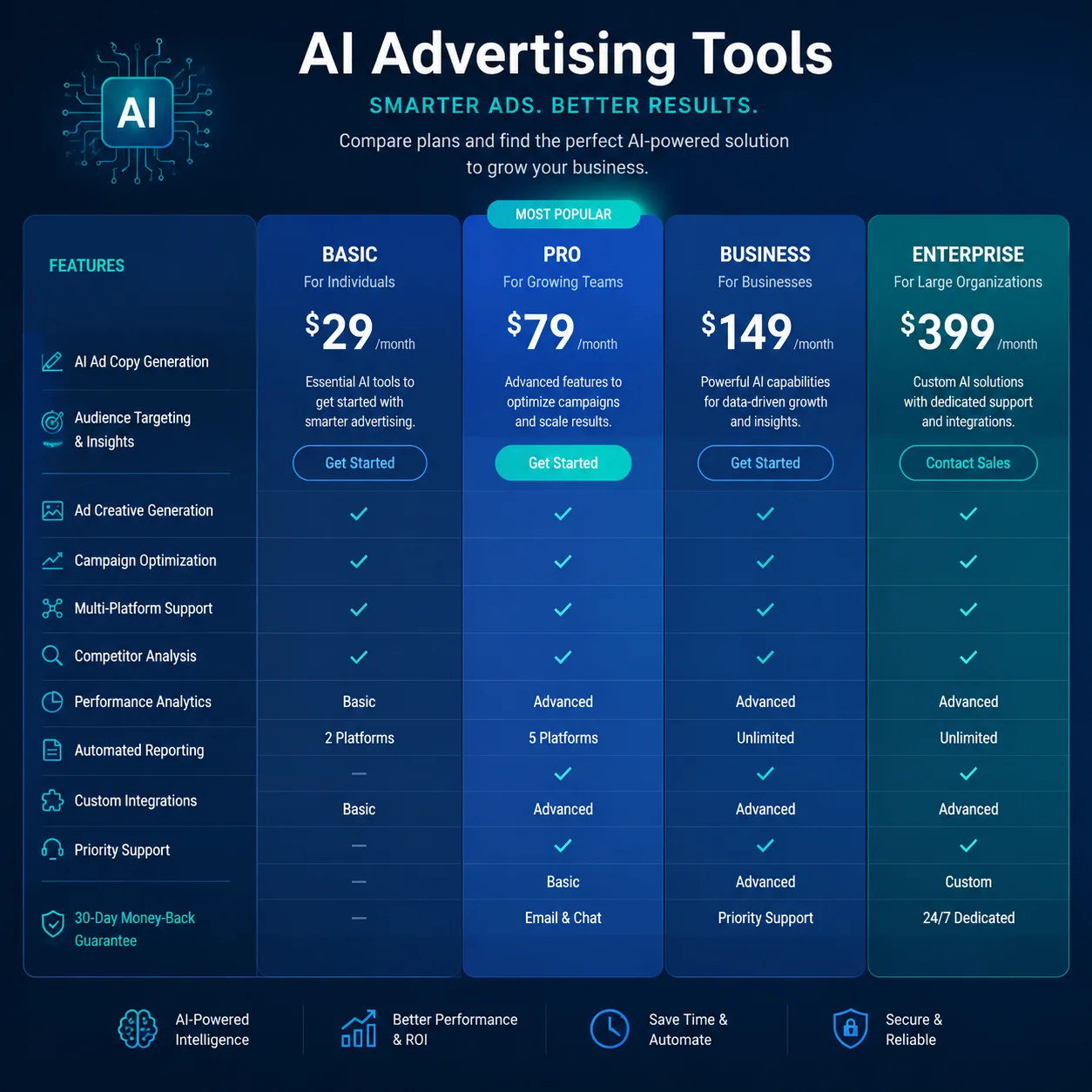
Understanding AI ad creative pricing models
Most AI ad creative platforms use one of three pricing models: subscription-based, credit-based, or usage-based. Subscription models charge a flat monthly fee for access to the platform and a set number of generations. Credit-based models let you purchase credits that are consumed per video or image generation. Usage-based models charge per output, often with tiered volume discounts.
The most cost-effective model depends on your production volume. Teams generating fewer than 20 videos per month often benefit from subscription tiers with predictable costs. High-volume teams producing hundreds of videos monthly typically get better value from credit-based systems that offer bulk discounts. Enterprise teams with custom needs may negotiate flat-rate annual contracts.
makeads pricing breakdown
makeads offers a straightforward credit-based system with no hidden fees. Credits are consumed per video generation, and the cost per video decreases as you purchase larger credit packages. A single 30-second video with one actor, subtitles, and standard resolution costs approximately one credit. Multi-language dubbing and lip sync consume additional credits per language.
The starter plan includes enough credits for small-scale testing and validation. The professional plan suits growing teams that need regular weekly output. The business plan is designed for agencies and brands producing fifty or more videos monthly. All plans include access to the full actor catalog, commercial usage rights, and standard export formats without additional charges.
AdCreative.ai pricing structure
AdCreative.ai targets teams focused on static display and social ad creatives. Their pricing is subscription-based with tiers defined by the number of ad variations generated per month. Higher tiers include additional features like team collaboration, white-label exports, and API access. The platform excels at static creative generation but has limited video capabilities.
For teams primarily creating banner ads and social image creatives, AdCreative.ai offers strong value. The AI optimizes copy and visual combinations based on historical performance data. However, teams that need video UGC content will need a complementary tool like makeads for video production.
Pencil platform costs
Pencil differentiates itself through creative testing automation. Their pricing reflects the predictive analytics and automated optimization features. The platform integrates with ad accounts to test and optimize creatives without manual intervention. Pricing is subscription-based with higher tiers offering more advanced automation and integration options.
Pencil is most valuable for established brands with significant ad spend who need systematic creative testing at scale. The automation features reduce the manual effort of launching and monitoring creative tests. For smaller teams, the pricing may be harder to justify compared to simpler tools that provide direct generation capabilities.
Hidden costs to watch for
Beyond the listed pricing, several hidden costs can significantly increase your total expenditure. Credit expiration policies vary widely between platforms. Some tools expire unused credits monthly, forcing you to purchase more than you need. Others offer rollover credits but only up to a cap.
Watermark removal is another common hidden cost. Free tiers often add watermarks that must be removed with paid upgrades. Commercial usage rights may be restricted on lower tiers, meaning you cannot use generated content in paid advertising. Export resolution limits, multi-user seat fees, and API access charges add to the total cost of ownership.
Calculating your total cost of ownership
When evaluating AI ad creative tools, calculate total cost of ownership rather than comparing base prices alone. Include subscription fees, credit top-ups, enterprise add-ons, integration costs, and the time cost of tool switching or workflow adaptation.
A tool with a higher base price but seamless workflow integration may be cheaper overall than a budget tool that requires manual workarounds and additional software to produce usable output. Factor in the cost of rework, rejected generations, and the time your team spends learning and optimizing each platform.
Which pricing model suits your team
Small teams and freelancers benefit from subscription models with predictable monthly costs and no surprise overage fees. Growing marketing teams need credit-based systems that scale with production volume without requiring contract renegotiations. Large enterprises with dedicated creative operations should negotiate custom pricing that reflects their volume commitments and feature requirements.
The best approach is to start with a free trial or small plan, validate the tool produces acceptable output for your use cases, then scale as your confidence and volume requirements grow. Most platforms allow plan upgrades mid-cycle, so you can adjust without committing to an expensive tier upfront.
Making the final decision
Choose the platform that delivers acceptable output quality at the lowest total cost for your specific production volume. For teams focused on UGC video ads with AI actors, dubbing, and subtitles, makeads offers the most competitive credit-based pricing with full features included at every tier. For static creative teams, AdCreative.ai provides specialized value. For automated testing at scale, Pencil is worth the premium.
Start with a trial of your top two candidates. Generate identical briefs on both platforms. Compare time to first acceptable output, quality consistency, and workflow friction. The tool that minimizes total time from brief to publish-ready creative is the most cost-effective choice, even if its per-generation price appears higher on paper.
How to apply this guide in makeads
Use this guide as a practical checkpoint for planning AI UGC videos, comparing creative angles, and deciding which parts of your workflow should be scripted, generated, reviewed, localized, and tested first.
The most useful next step is to translate the advice into one production brief: define the audience, the opening hook, the proof moment, the actor style, subtitle requirements, and the metric you will use to decide whether a video variant is worth scaling.
Related focus areas for this topic include AI Advertising, Ad Creative, Pricing Guide, Marketing Tools. If you are building a campaign library, connect this guide with your pricing assumptions, platform policy checks, and localization plan before creating the final export.